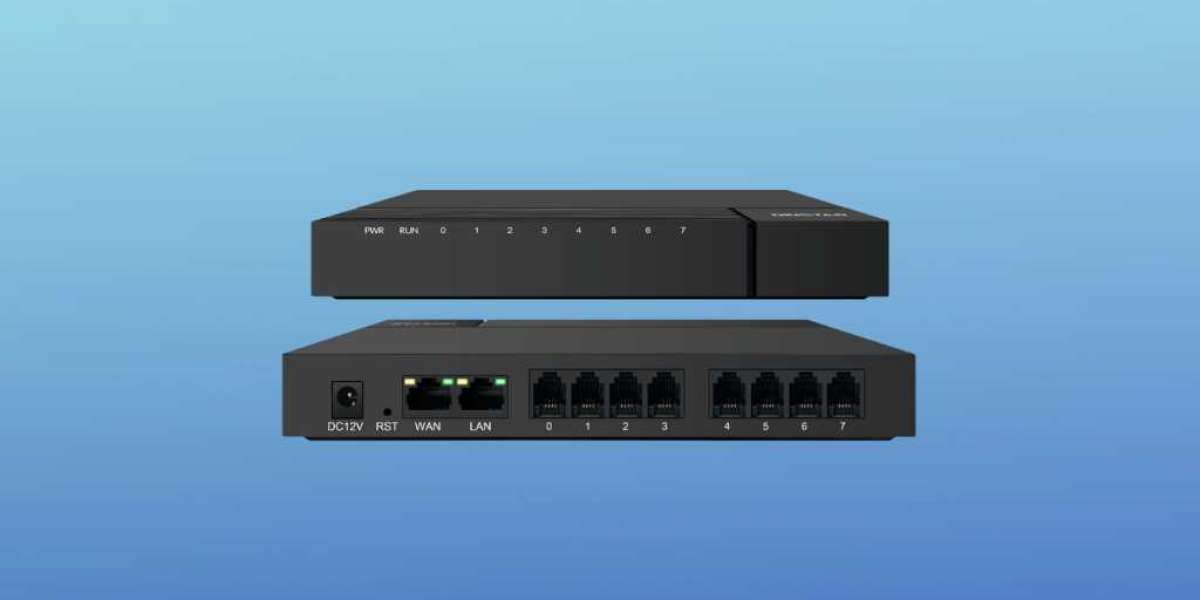

As businesses continue to shift toward IP-based communication, reliable voice gateways play a critical role in bridging traditional telephony with modern networks. An 8 Port VoIP Gateway is designed to support organizations that require multiple voice connections while maintaining call quality, scalability, and cost efficiency. It serves as a dependable interface between existing voice infrastructure and IP-based communication systems, making it a popular choice for small and mid-sized enterprises.
What Is an 8 Port VoIP Gateway?
An 8 Port VoIP Gateway is a communication device that enables the integration of multiple voice lines into an IP network. It allows businesses to transmit voice calls over the internet or private IP networks rather than relying solely on conventional telephony systems. With support for up to eight voice connections, this gateway offers a balanced solution for offices that handle moderate call volumes without requiring complex or oversized systems.
By converting voice signals into IP packets and vice versa, the gateway ensures smooth interoperability between legacy systems and modern VoIP platforms.
How an 8 Port VoIP Gateway Works
The gateway acts as a translator between voice endpoints and IP-based communication platforms. When a call is initiated, the device processes the audio signal, compresses it using supported codecs, and transmits it over the IP network. Incoming calls follow the reverse process, ensuring clear and consistent voice delivery.
Advanced routing capabilities allow calls to be managed efficiently, while signaling protocols ensure compatibility with IP PBX systems, softswitches, and unified communication platforms. This seamless operation helps businesses maintain uninterrupted voice communication.
Key Features and Capabilities
An 8 Port VoIP Gateway is equipped with features that support stable and high-quality communication:
Multiple Voice Connections: Supports up to eight simultaneous voice channels, ideal for growing teams
High-Quality Audio Processing: Advanced voice compression and echo cancellation for clear calls
Protocol Compatibility: Works with widely used VoIP standards to ensure easy integration
Network Optimization: QoS support helps prioritize voice traffic over data
Security Mechanisms: Built-in protections safeguard voice communication from unauthorized access
These features collectively ensure reliable performance in both day-to-day operations and peak call scenarios.
Benefits for Businesses
Implementing an 8 Port VoIP Gateway offers several advantages:
Cost Efficiency
By routing voice traffic over IP networks, businesses can significantly reduce communication costs, especially for long-distance and internal calls.
Smooth Migration to VoIP
Organizations can modernize their communication infrastructure without completely replacing existing systems, making the transition more manageable.
Scalability
As business needs grow, gateways can be integrated into larger VoIP environments without disrupting operations.
Centralized Call Management
The gateway enables better control over call routing, monitoring, and maintenance through a single interface.
Common Use Cases
An 8 Port VoIP Gateway is well-suited for various environments, including:
Small and medium-sized offices with moderate call traffic
Branch offices that need centralized communication control
Customer support teams requiring reliable voice connectivity
Enterprises transitioning from legacy systems to IP-based communication
Its flexibility allows it to adapt to different operational requirements while maintaining consistent performance.
Deployment and Integration
Deployment of an 8 Port VoIP Gateway is typically straightforward. It can be integrated with existing IP PBX systems or unified communication platforms without extensive configuration. Network administrators can manage routing rules, codecs, and security settings through a user-friendly interface.
Once installed, the gateway operates as a core communication component, ensuring reliable voice connectivity across the organization.
Choosing the Right 8 Port VoIP Gateway
When selecting a gateway, businesses should consider factors such as compatibility with existing systems, audio quality, network support, and vendor reliability. A well-chosen gateway not only enhances communication efficiency but also supports long-term scalability and operational stability.
Investing in a high-quality 8 Port VoIP Gateway ensures smoother communication, reduced downtime, and better overall user experience.
Conclusion
An 8 Port VoIP Gateway is a practical and efficient solution for businesses seeking to modernize their communication infrastructure without unnecessary complexity. By enabling seamless integration between traditional voice systems and IP networks, it delivers flexibility, cost savings, and reliable performance. For organizations looking to enhance voice communication while preparing for future growth, this gateway serves as a strong foundation.





