
In today’s digital world, videos are everywhere—whether you're watching movies, uploading content to social media, creating online tutorials, or storing family memories. However, not all devices or platforms support every video format. This is exactly where a video converter becomes essential.
A bold, reliable, and user-friendly video converter helps you change one file format into another without losing quality. It allows you to play your videos on any device, compress large files, edit basic settings, and prepare them for online sharing.
What Is a Video Converter?
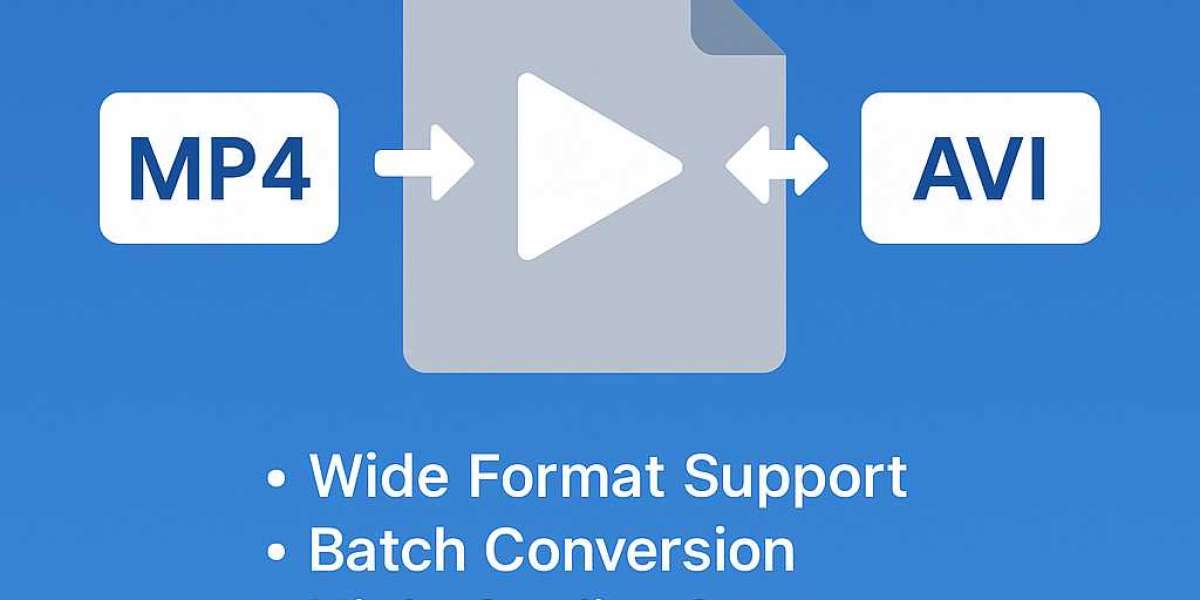
A video converter is a software tool or online application that transforms video files from one format to another. For example, you can convert MP4 to AVI, MOV to MP3, or any format required by your device or platform.
This tool is useful for:
Playing videos on unsupported devices
Reducing file size for faster uploads
Improving compatibility for editing software
Making videos suitable for websites and apps
Saving videos in an audio-only format
How a Video Converter Works
A video converter follows a simple step-by-step process:
Uploads the video into the software or online platform
Decodes the original format
Re-encodes the content into the selected format
Applies compression (optional) to reduce file size
Exports the new file ready for use
This process is automatic, smooth, and requires no technical skills. Most converters allow you to convert files in just a few clicks.
Why You Need a Video Converter
Using a video converter is essential for many reasons, whether you are a student, creator, professional, or casual user. Here are the main benefits:
1. Compatibility Across All Devices
Different devices support different video formats. A video converter ensures that your video plays smoothly on:
Mobile phones
Laptops
Smart TVs
Editing software
Gaming consoles
DVD players
2. Reduced File Size
Large videos take up storage and are slow to upload. Converting them to smaller formats saves space without losing quality.
3. Easy Sharing
Social media platforms often have specific video requirements. A video converter helps you prepare videos for:
YouTube
Facebook
Instagram
TikTok
WhatsApp
4. Better Editing
Editing software works better with certain file formats. Converting your video ensures smoother and faster editing.
5. Extracting Audio
If you only need the sound, you can convert a video to an audio format like MP3.
Types of Video Converters
There are different types of converters to suit different needs.
1. Online Video Converters
These work directly in your browser and require no installation.
Best for:
Quick conversions
Low storage devices
Simple tasks
2. Offline / Desktop Video Converters
These are downloadable software tools offering advanced features.
Best for:
Batch conversions
High-quality output
Faster processing
3. Mobile Video Converters
These are apps for Android and iOS.
Best for:
On-the-go video conversions
Social media creators
Key Features to Look for in a Video Converter
Choosing the right video converter is important. Here’s what you should check:
✔ Multiple Format Support
A good converter must support:
MP4, MOV, AVI, MKV, FLV
MP3, WAV, AAC
4K, HD, SD
✔ Fast Conversion Speed
Advanced converters use GPU acceleration for quick results.
✔ High-Quality Output
Look for converters that preserve video quality even after compression.
✔ Batch Processing
This allows you to convert multiple videos at once.
✔ Basic Editing Tools
Many converters include features like:
Cutting
Trimming
Merging
Adding subtitles
Rotating
✔ User-Friendly Interface
A simple and clean design makes conversion easier for beginners.
Popular Uses of a Video Converter
A video converter has endless uses. Below are the most common ones:
Preparing videos for social media uploads
Making online lectures smaller for fast sharing
Converting movies to formats supported by smart TVs
Extracting audio from YouTube videos
Converting high-quality DSLR footage for editing
Compressing videos before emailing them
Making videos play on old phones or computers
Benefits of Using a Video Converter
Here are some major advantages:
⭐ Improves Device Compatibility
Play any video on any device.
⭐ Saves Storage Space
Compress large videos without losing too much quality.
⭐ Speeds Up Upload Time
Smaller file sizes = faster uploads.
⭐ Supports High-Quality Output
Modern converters maintain HD or even 4K quality.
⭐ Easy for Everyone
No technical expertise required.
⭐ Time-Saving
Batch conversions streamline your workflow.
Common Video Formats Explained
Understanding formats helps you choose the right conversion:
| Format | Best Use |
|---|---|
| MP4 | Universal, best for online uploads |
| AVI | High quality, larger size |
| MOV | Apple devices, professional editing |
| MKV | Movies, subtitles support |
| FLV | Older web videos |
| MP3 | Audio-only extraction |
How to Use a Video Converter (Step-by-Step)
Here’s a simple guide:
Open your chosen video converter
Import or drag-and-drop your video
Select the output format (e.g., MP4, MP3, MOV)
Adjust settings if needed
Click Convert or Start
Download the converted file
When to Use a Video Converter
Use a video converter when:
A device cannot open your video
File size is too large
Uploading to YouTube or Instagram
Editing requires a specific format
You want to extract audio from a video
Sharing videos on low-internet connections
Frequently Asked Questions (FAQs)
1. What is a video converter?
A video converter is a tool that changes a video's format so it can play on different devices and platforms.
2. Does converting a video reduce quality?
Not always. Many converters preserve original quality or allow you to choose HD or 4K output.
3. Can I convert multiple videos at once?
Yes, many converters support batch processing for faster workflow.
4. Is an online video converter safe?
Trusted online converters are safe, but avoid uploading sensitive or personal videos.
5. What is the best format for social media?
MP4 (H.264) is the most widely accepted and recommended format for online platforms.
6. Can I extract audio using a video converter?
Yes, you can convert videos to audio formats like MP3 or WAV easily.
7. Are mobile video converters good?
Yes, they work well for quick conversions and social media content.
8. Can I convert videos without losing quality?
Use high-quality modes or “lossless conversion” options for best results.
Final Thoughts
A video converter is an essential tool for anyone who works with videos—whether you are a content creator, student, professional, or casual user. It gives you complete flexibility to play, edit, share, and compress videos easily.
With the right video converter, you can save time, storage space, and effort while ensuring your videos work smoothly on any device or platform.