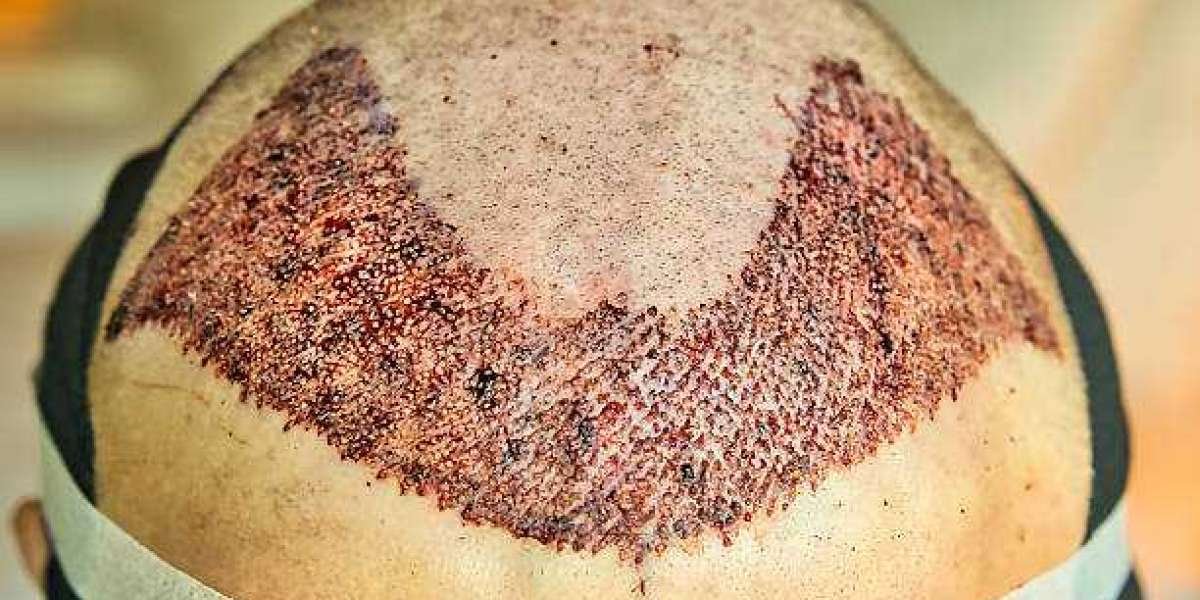

Diffuse thinning creates a different restoration challenge from a clearly defined bald patch. Hair Transplant in Dubai may be considered when thinning affects broader areas but sufficient healthy donor follicles remain available. Because native hair is still present throughout the recipient region, treatment planning must focus on identifying where additional follicles can provide meaningful improvement without unnecessarily disturbing existing growth.
The objective is not simply to fill empty scalp. Instead, the procedure may involve strategically increasing the overall visual fullness while protecting the native follicles that are still contributing to coverage.
What Makes Diffuse Hair Loss Different
In a conventional receding pattern, the areas requiring restoration can often be identified relatively easily.
Diffuse thinning is less defined.
Hair density may gradually decrease across the frontal scalp, mid-scalp, crown, or several regions simultaneously. The patient may still have substantial hair coverage, but individual strands can become finer and the overall appearance less full.
This creates a more complex planning environment.
Diffuse Thinning Does Not Always Mean Complete Baldness
A patient can have significant hair loss while still retaining thousands of native follicles across the affected area.
Those follicles matter.
If they remain viable, they contribute to the final appearance and may continue producing hair. Any transplant strategy therefore needs to account for their presence.
The Pattern Can Be Easy to Misread
Diffuse thinning can sometimes appear more extensive under bright lighting, after wetting the hair, or when the hair is separated.
A clinical assessment should distinguish between actual follicular reduction and temporary changes in how the scalp is visually exposed.
Hair Transplant in Dubai When Native Hair Is Still Present
Transplanting into a diffusely thinning scalp requires a different mindset from filling a completely bald region.
New grafts may need to be positioned among existing follicles.
This creates a requirement for careful recipient-site planning.
Protecting Existing Follicles
Native follicles should be treated as valuable existing assets.
Unnecessary trauma to functioning follicles could reduce the coverage the patient already has.
Planning therefore involves identifying suitable spaces between existing hairs and considering their growth direction before creating new recipient sites.
New Grafts Should Complement Native Growth
The purpose of transplanted follicles is not to replace every native hair.
Instead, they can be used strategically to increase overall coverage where the existing density has become insufficient.
This can make efficient use of the donor supply.
Assessing Whether Diffuse Thinning Is Stable
One of the most important questions before surgery is whether the underlying hair-loss pattern is stable enough for transplantation.
Diffuse thinning may continue to progress.
If native hair continues to miniaturize significantly after surgery, the patient could experience further reduction in density around the newly transplanted follicles.
Why Stability Matters
Transplanted follicles are intended to provide long-term growth, but native follicles can remain susceptible to the underlying cause of hair loss.
This means a successful transplant does not necessarily stop the progression of untreated native-hair loss.
A long-term strategy may therefore involve medical management, monitoring, or staged restoration when clinically appropriate.
The Pattern Should Be Evaluated Over Time
Photographs, previous treatment history, family pattern, clinical examination, and changes in density can all help establish how the condition has developed.
A single-day visual assessment may not tell the entire story.
Mapping Diffuse Hair Loss Before Hair Transplantation
A detailed scalp assessment can help identify the regions where thinning is most significant.
Instead of treating the scalp as one continuous surface, the surgeon can consider individual zones according to their density, hair characteristics, and visual importance.
| Area | What may be assessed | Planning consideration |
|---|---|---|
| Frontal region | Existing hairline and native density | Blend new follicles with existing growth |
| Mid-scalp | Degree of diffuse reduction | Add coverage without disrupting native follicles |
| Crown | Density and growth direction | Consider whether grafts provide sufficient visual benefit |
| Transition zones | Variation in native density | Avoid abrupt changes in appearance |
| Donor region | Follicular reserve | Protect long-term graft availability |
This zone-based assessment can help prioritize graft placement.
Why Graft Numbers Alone Do Not Define the Result
Patients with diffuse thinning sometimes assume that a higher graft number automatically produces a better outcome.
That is not necessarily the case.
The visual effect of transplantation depends on the interaction between graft placement, native hair, hair caliber, donor characteristics, and recipient-site design.
Using a large number of grafts without considering existing follicles can unnecessarily consume donor resources.
Strategic Placement Can Improve Efficiency
A carefully selected recipient area may provide greater visual improvement than spreading grafts too thinly across a much larger scalp region.
The planning question becomes:
Where will each graft create the greatest meaningful improvement?
This approach is particularly relevant when donor supply is finite.
Hair Characteristics Can Change the Appearance of Diffuse Thinning
Two patients with similar follicular density may look completely different.
Hair caliber, texture, length, curl, and contrast between hair and scalp all affect perceived coverage.
Fine Hair Can Increase Transparency
When individual shafts become thinner, more light can pass through the hair, making the scalp appear more visible.
The patient may therefore notice reduced fullness even before substantial areas become completely bald.
Hair Texture Can Influence Visual Volume
Wavy or curly hair can create greater three-dimensional volume, while straight hair may lie closer to the scalp.
The transplant plan should therefore be based on the patient's actual visual characteristics rather than relying exclusively on a numerical density target.
Hair Transplant in Dubai for Diffuse Pattern Hair Loss
Diffuse pattern hair loss can affect men and women differently, and the underlying diagnosis matters before surgical treatment is considered.
Not every type of diffuse shedding is appropriate for transplantation.
Temporary shedding, inflammatory scalp conditions, nutritional problems, hormonal changes, medication-related loss, and other medical causes may require evaluation before surgery.
Diagnosis Comes Before Graft Planning
A patient should not assume that every form of diffuse thinning represents permanent follicular loss.
Identifying the underlying pattern helps determine whether transplantation is appropriate and whether another intervention should be considered first.
Miniaturization Provides Useful Information
When native follicles become progressively smaller, the scalp may appear increasingly transparent.
Evaluating the characteristics of existing follicles can help distinguish stable donor hair from areas where native hair may continue to weaken.
Preserving Native Hair During Recipient-Site Creation
One of the defining challenges of diffuse transplantation is working between existing follicles.
The recipient area is not an empty field.
Existing Hair Changes the Surgical Map
The location of native follicles can influence where new recipient sites are created.
Spacing, angle, and direction must be considered so the new grafts integrate with the existing pattern.
Avoiding Unnecessary Trauma
The goal is to minimize disruption to viable native follicles.
This is particularly important when the patient already has substantial coverage and is seeking improvement rather than complete reconstruction.
Managing Expectations With Diffuse Thinning
A patient with diffuse thinning may expect the scalp to become as dense as it appeared earlier in life.
That may not be realistic.
The achievable improvement depends on donor availability, native follicle quality, the extent of thinning, and the number of grafts that can be safely allocated.
A more useful expectation is meaningful improvement in visual fullness rather than restoration to an exact historical density.
Improvement May Be Most Noticeable in Certain Conditions
Patients may notice a difference when:
- Hair is styled normally
- The scalp is viewed under everyday lighting
- Hair is dry rather than wet
- The affected region is compared with its pre-treatment appearance
- Native and transplanted hair grow together
The final result should be assessed in realistic daily conditions rather than under a single harsh light source.
Planning the Donor Supply Around Diffuse Loss
Diffuse thinning can create a temptation to cover a large area.
That can quickly increase the number of grafts required.
However, donor follicles remain limited.
Avoiding Overextension
Trying to spread grafts across every visibly thinner area may result in insufficient coverage anywhere.
Prioritization can be more effective.
The frontal region may receive greater attention in one patient, while another may benefit from concentrating grafts in a different visually important zone.
Future Loss Must Remain Part of the Plan
The donor area needs to serve the patient's future needs as well as the current procedure.
A conservative approach can help maintain flexibility if native hair loss progresses.
Dubai Lifestyle Considerations for Diffuse Hair Restoration
Dubai's climate can influence practical recovery planning.
Strong sunlight, high temperatures, outdoor activities, and frequent air-conditioning exposure can all affect how patients manage their scalp during recovery.
Postoperative instructions should be followed carefully, particularly regarding sun exposure, physical activity, washing, and scalp handling.
Patients with demanding work or social schedules may also want to plan the procedure during a period that allows appropriate recovery without unnecessary pressure to return to normal styling immediately.
Hair Transplant in Dubai and Long-Term Native Hair Management
A transplant addresses the distribution of follicles but does not necessarily eliminate the biological process responsible for native-hair thinning.
This distinction is especially important in diffuse cases.
The transplanted follicles may remain useful while surrounding native follicles continue to change.
Monitoring Can Be Valuable
Periodic assessment can help determine whether native hair is remaining stable or continuing to thin.
This information can influence future treatment decisions.
Medical Management May Complement Surgery
Depending on the diagnosis and individual circumstances, a clinician may discuss non-surgical approaches alongside or before transplantation.
The purpose is to protect the patient's existing hair when possible and create a more sustainable overall restoration strategy.
When Diffuse Thinning May Not Be Ready for Transplantation
Not every patient with diffuse thinning should immediately undergo surgery.
Additional evaluation may be appropriate when the loss is:
- Rapidly changing
- Newly developed
- Associated with significant shedding
- Accompanied by scalp symptoms
- Poorly defined diagnostically
- Affecting the donor area
- Difficult to distinguish from a temporary condition
Surgical restoration is most useful when the underlying situation is sufficiently understood to support a realistic plan.
Questions to Ask About Diffuse Hair Transplantation
Can a hair transplant treat diffuse thinning?
It may be suitable for selected patients when adequate donor follicles are available and the underlying hair-loss pattern is appropriate for surgical restoration.
Can grafts be placed between existing hairs?
In suitable cases, recipient sites can be planned among native follicles, with the goal of improving coverage while minimizing unnecessary disturbance.
Does diffuse thinning require more grafts?
Not automatically. Graft requirements depend on the area being treated, existing density, hair characteristics, and the desired level of improvement.
Will a transplant stop native hair loss?
No. Transplantation redistributes follicles but does not necessarily stop the underlying process affecting native hair.
Is medical treatment needed before a transplant?
It depends on the cause and stability of the hair loss. Some forms of diffuse shedding require diagnosis or stabilization before surgery is considered.
Can diffuse thinning return after transplantation?
Native hair can continue to thin even when transplanted follicles remain productive, which is why long-term planning is important.
Creating a Sustainable Restoration Plan
Diffuse thinning rewards careful prioritization.
The objective is to improve overall appearance while preserving the patient's remaining native follicles and donor reserve.
That may require a combination of diagnosis, monitoring, medical management, conservative graft allocation, and carefully positioned transplantation.
A strong treatment plan should answer three questions before surgery: what caused the thinning, which follicles are likely to remain useful, and where can additional grafts create the greatest visual improvement?
The Strategic Investment
For patients with widespread thinning but substantial remaining native hair, Hair Transplant in Dubai should be approached as a precision procedure rather than a simple method of adding maximum graft numbers. Careful assessment of native follicles, donor reserves, hair characteristics, progression, and recipient-site spacing can help create a restoration strategy that works with the patient's existing hair instead of unnecessarily replacing it.
Patients considering an individualized assessment can explore hair-restoration information through Tajmeels Clinic and discuss whether their pattern of diffuse thinning is appropriate for surgical planning.





