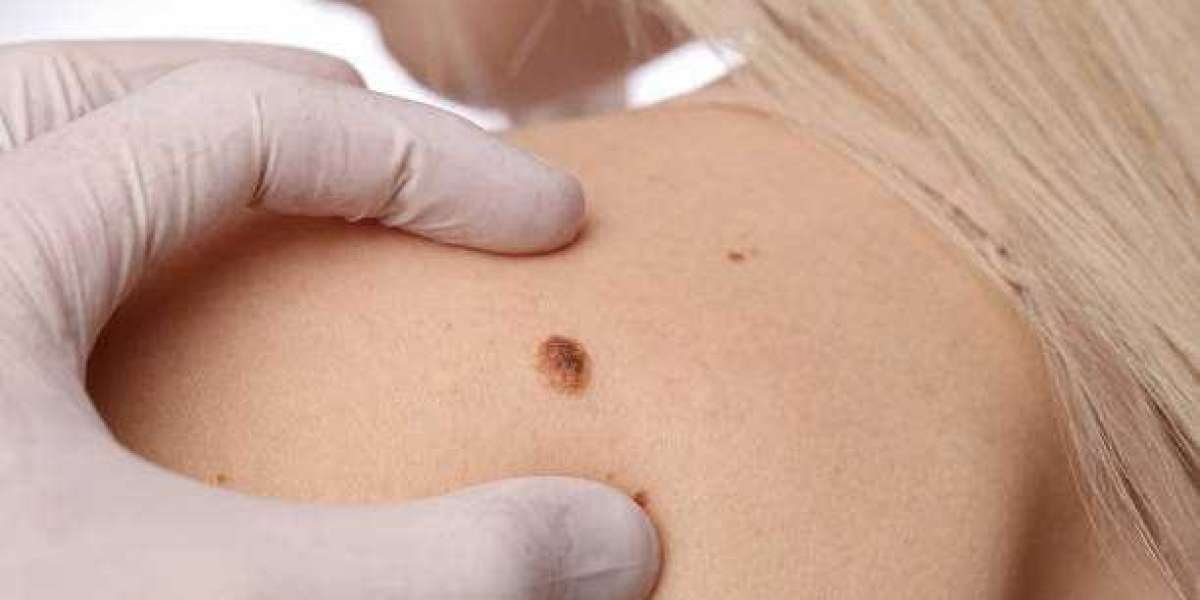

If you have a mole that is changing, causing discomfort, or simply bothers you for cosmetic reasons, understanding the professional removal process can help ease any anxiety. For those considering Mole Removal in Riyadh, knowing what to expect—from the initial consultation to the final follow-up—ensures you approach the procedure with confidence.Mole Removal in Riyadh provides a detailed walkthrough of a typical professional mole removal appointment.
Step 1: The Consultation and Evaluation
The journey begins with a thorough consultation . A dermatologist will first examine your mole, assessing its size, shape, and color. A key tool used is the dermatoscope, a magnifying device that reveals structures beneath the skin's surface. The doctor will apply the ABCDE rule (Asymmetry, Border, Color, Diameter, Evolution) to determine if the mole is suspicious . If there is any concern, removal for a biopsy is recommended. Even if you are seeking removal for cosmetic reasons, the doctor must confirm the mole is benign before proceeding with certain methods .
Step 2: Numbing the Area
Once you and your doctor have decided on the best approach, the procedure itself can often be performed the same day . The first step is to ensure your comfort. A small injection of local anesthetic (like lidocaine) is administered around the mole . This quickly numbs the area, so you will not feel pain during the removal, only a slight pressure or sensation of movement . For those with a fear of needles, a numbing cream may be used first to minimize the sting of the injection.
Step 3: The Removal Procedure
The specific technique used will depend on the mole's type, size, depth, and location . Here are the most common professional methods:
Shave Excision (For Raised Moles): This quick technique is often used for raised, non-cancerous moles. After the area is numbed, the dermatologist uses a fine, sterile blade to carefully shave the mole off flush with the surrounding skin . Stitches are usually not required, and the area will heal like a small scrape . While this method often leaves a flat, faint scar, there is a small chance the mole could grow back .
Surgical Excision (For Complete Removal): This is the gold standard for deeper or suspicious moles that need to be evaluated for skin cancer . The doctor cuts out the entire mole and a small margin of healthy skin around it . The wound is then closed with fine sutures (stitches) . This method ensures complete removal and provides the best tissue sample for pathology. It leaves a small, linear scar, which can be placed in a natural skin crease to minimize visibility .
Laser Removal (For Flat, Benign Moles): For certain flat, pigmented moles that have been confirmed as completely harmless, a laser may be used. The laser delivers focused light energy that breaks down the pigment in the mole . This non-invasive method does not involve cutting or stitches and can heal with minimal to no mark. However, a major limitation is that the laser destroys the tissue, so it cannot be biopsied . For this reason, dermatologists generally do not recommend lasers for any mole that is suspicious.
Radiosurgery: This modern technique uses radiowaves to precisely remove the mole, often with very fine margins and minimal damage to the surrounding skin . It can be a good option for certain benign moles where cosmetic precision is important.
Step 4: Dressing and Aftercare
Once the mole is removed, the doctor will apply a small dressing or bandage to protect the area as it begins to heal . You will receive clear, written aftercare instructions. Generally, this involves keeping the area clean and dry, applying a prescribed ointment (like petroleum jelly), and avoiding picking at any scab that forms .
Step 5: Pathology Testing
A critical and standard step, regardless of the removal method (except for laser), is sending the removed tissue to a pathology lab for histological examination . This is the only definitive way to know if a mole is benign, atypical, or cancerous. The results, which typically take 5 to 7 working days, provide essential information for your long-term health and peace of mind . Your dermatologist will discuss the results with you at a follow-up appointment.
Step 6: Suture Removal and Follow-Up
If you had a surgical excision with stitches, you will need a follow-up appointment to have them removed. Stitches on the face are usually removed in 5 to 7 days, while those on the body may stay in for 7 to 14 days . This is also an opportunity for the doctor to check on your healing and discuss the pathology report if it hasn't been reviewed yet.
For those seeking expert guidance and customized aesthetic care, you can book an appointment consultation at the Enfield Royal Clinic.
Frequently Asked Questions
Is the mole removal procedure painful?
No. The area is numbed with a local anesthetic, so you will feel no pain during the removal, only slight pressure.
Can I have my mole removed on the same day as my consultation?
In many cases, yes. After your dermatologist evaluates your mole, the removal can often be performed during the same visit .
Why is my mole being sent to a lab after removal?
All moles removed for any reason are typically sent for pathology testing. This is the only way to definitively confirm if a mole is benign or contains cancerous cells .
How long does the actual mole removal take?
The procedure itself is quick, typically taking between 10 to 30 minutes, depending on the method and the mole's characteristics .
When will I get my mole biopsy results?
You can expect to receive the results of the pathology test in about 5 to 7 working days .