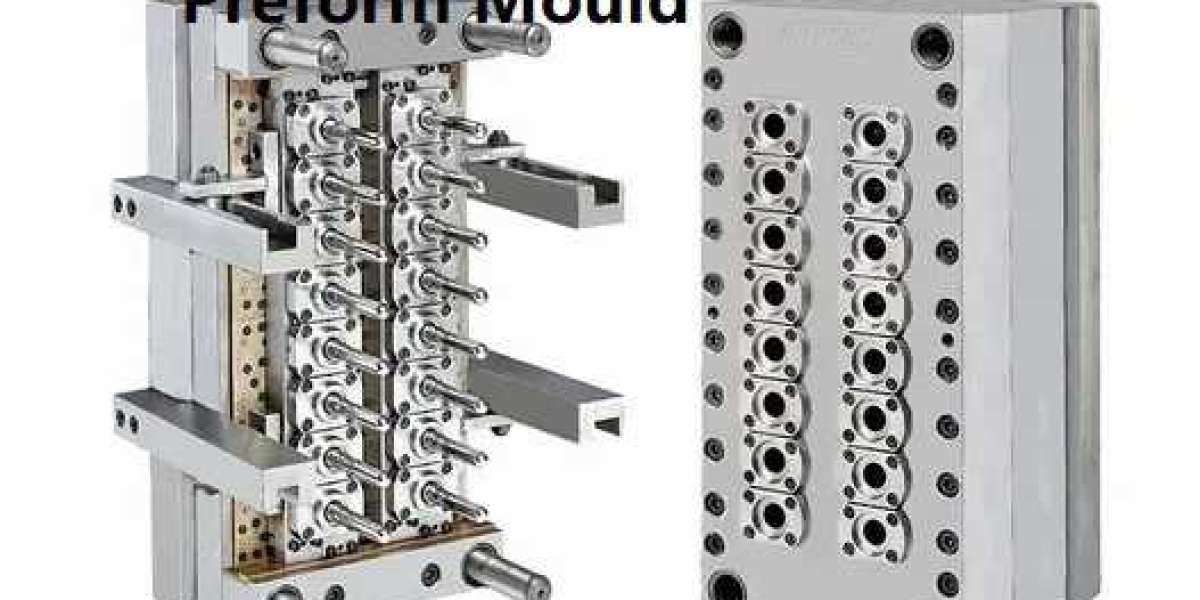

In plastic packaging manufacturing, selecting a suitable Bottle Blowing Mould can influence bottle shape, wall distribution, production stability, and finished appearance, while a properly designed Bottle Blowing Mould helps manufacturers maintain consistent forming results across repeated production cycles. The mould is used during the stretch blow molding process, where heated preforms are expanded against the cavity surface to create the final container. For beverage bottles, cosmetic packaging, household containers, and other PET products, mould design should match the bottle concept, production equipment, material characteristics, and expected output.
Understanding the Bottle Blowing Process
The bottle blowing stage transforms a heated preform into its final container shape. During this process, the preform is stretched and expanded inside the mould cavity until it reaches the required dimensions.
The cavity therefore has a direct relationship with the finished bottle. Its internal profile determines the external shape, while details such as the base structure, shoulder design, body diameter, and overall height need to correspond with the intended packaging.
A mould should provide sufficient accuracy to reproduce the same shape repeatedly. In high-volume manufacturing, even small differences between production cycles can affect appearance, filling capacity, labeling, and packaging performance.
For this reason, bottle mould design should begin with a clear understanding of the finished product rather than focusing only on the mould itself.
Cavity Design and Bottle Appearance
Cavity geometry is one of the most important aspects of a bottle mould. The internal surface needs to reproduce the required bottle profile accurately while allowing the heated material to distribute properly during stretching.
Different bottles require different structural approaches. A lightweight water bottle may prioritize material efficiency, while a cosmetic container may place greater emphasis on detailed contours and surface appearance.
The base is also important because it can influence how the finished bottle stands and handles internal pressure. Shoulder and neck transitions should be coordinated with the preform specifications and blowing process.
Surface finishing can affect the appearance of the final container as well. A carefully processed cavity can help produce a cleaner and more consistent bottle surface, which is especially useful for packaging where visual presentation matters.
Qhpreformmould Manufacturing for Packaging Needs
Manufacturing accuracy is essential when producing moulds for repeated bottle production. Cavity sections, inserts, cooling passages, and other components need to be processed and assembled according to the required dimensions.
Qhpreformmould focuses on mould solutions for PET bottle production and can support projects involving different bottle shapes, sizes, and packaging requirements. Buyers can provide bottle drawings, samples, dimensions, capacity information, and machine details to help determine a suitable mould structure.
Customization is particularly useful when a packaging company is developing a new container. Instead of relying on a general bottle profile, the mould can be designed around the required appearance and production conditions.
Communication between the mould manufacturer and packaging producer is important throughout the project. Clear technical drawings and confirmed specifications can help prevent dimensional misunderstandings before machining begins.
Cooling, Materials, and Production Efficiency
Cooling design can have a significant effect on mould performance. During blow molding, heat needs to be removed efficiently from the mould and bottle surface to support stable production cycles.
Properly arranged cooling passages can contribute to more consistent temperature control. This may help manufacturers maintain bottle dimensions and reduce unnecessary cycle variation.
Material selection also deserves consideration. Mould materials should provide suitable strength, thermal performance, corrosion resistance, and machinability for the intended production environment.
Production volume is another factor. A mould designed for continuous high-output manufacturing may require different considerations from one used for smaller specialty packaging projects.
Manufacturers should therefore evaluate the complete production system, including blowing equipment, bottle material, expected cycle time, cavity configuration, and maintenance arrangements.
Maintenance and Long-Term Mould Performance
Regular maintenance can help extend mould service life and maintain consistent bottle quality. During operation, cavity surfaces can accumulate residues, while moving components and seals may experience normal wear.
Routine cleaning and inspection can help identify potential problems before they become production interruptions. Cooling passages should also be monitored to ensure that temperature control remains effective.
Maintenance access should be considered during the mould design stage. Components that can be inspected or replaced conveniently can reduce downtime during servicing.
Manufacturers should also maintain production and maintenance records. Tracking operating cycles, cleaning schedules, component replacement, and observed defects can help identify patterns and improve future maintenance planning.
Choosing a mould manufacturer should therefore involve more than evaluating the initial purchase price. Precision, customization capability, cooling design, machine compatibility, maintenance support, and communication can all influence the long-term value of the mould.
A well-designed bottle mould can become an important part of an efficient packaging operation. Accurate cavity geometry, suitable materials, effective cooling, practical maintenance, and compatibility with the blowing machine can help manufacturers achieve stable and repeatable bottle production. Companies seeking bottle mould solutions can learn more about Taizhou Qihong Mold Co., Ltd. through Taizhou Qihong Mold Co., Ltd. .