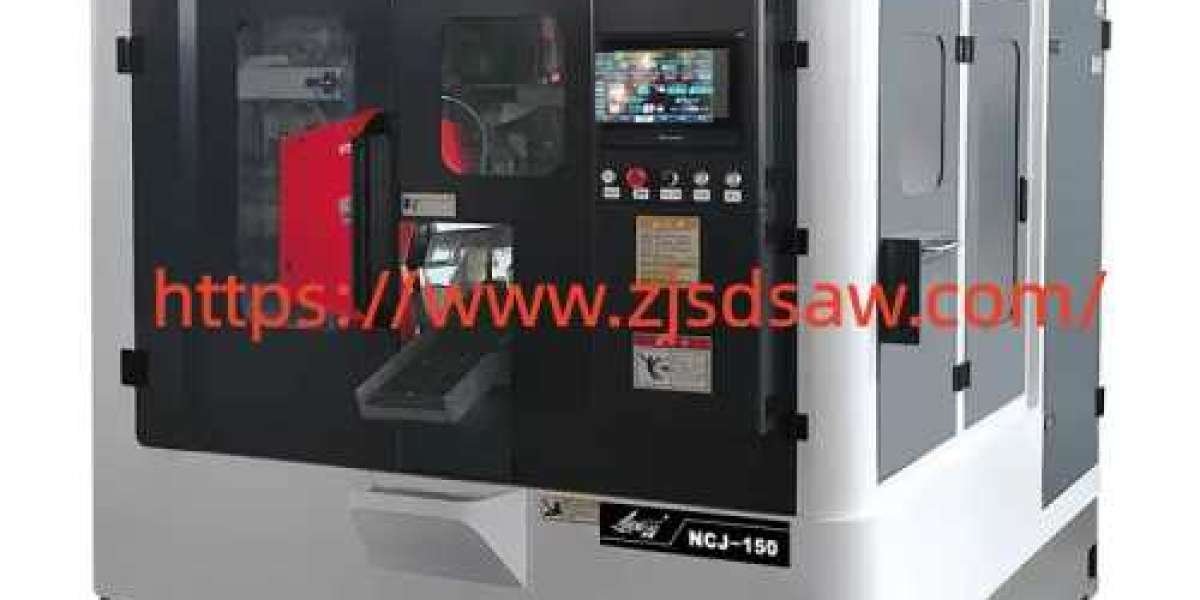

Graphite Cutting Band Saw Machine selection requires careful consideration because graphite behaves differently from many conventional industrial materials. Buyers should examine material grade, workpiece dimensions, blade configuration, cutting conditions, dust collection, workpiece support, operating controls, and maintenance requirements before placing an order. A clear application profile gives manufacturers useful information for recommending a suitable configuration.
The material itself should be the starting point. Natural graphite, synthetic graphite, carbon graphite, and different grades used for electrodes or industrial components can have different physical characteristics. Density, hardness, grain structure, brittleness, and workpiece dimensions can influence the cutting approach. Buyers should provide material specifications and typical workpiece sizes when discussing equipment with a manufacturer.
Dust management deserves particular attention. Machining graphite can generate fine particles that spread around the working area. The Industrial Graphite Engineering Handbook recommends adequate dust collection and notes that collection should take place as close to the generation point as practical. It also emphasizes good housekeeping during machining operations.
This means a purchaser should not evaluate the machine separately from the surrounding extraction arrangement. Ask where particles will be collected, how the collection point is positioned, how filters are maintained, and whether the workshop already has a suitable extraction system. Toyo Tanso also advises the use of dust collection equipment when graphite is machined.
Blade selection is another important subject. Graphite is abrasive and brittle, so the cutting edge needs to match the material and application. Buyers should discuss blade material, tooth geometry, pitch, dimensions, tension, replacement procedures, and operating speed with the manufacturer. Choosing a blade only by size may overlook important differences in actual processing conditions.
Workpiece stability also matters. Graphite components can be brittle, and excessive movement during processing may contribute to edge damage or inconsistent results. The support arrangement should therefore correspond with the shape, thickness, weight, and dimensions of the workpiece. Buyers can ask about vise design, support points, positioning methods, and loading procedures before making a purchasing decision.
Operating parameters should be considered as a complete group. Blade speed, feed rate, tooth pitch, clamping pressure, and workpiece support can influence the cutting process. Research and machining experience indicate that cutting parameters and tool geometry need to be considered together when processing graphite.
A common mistake is to focus on speed alone. Faster operation does not automatically suit every material grade or workpiece shape. Buyers should instead ask the manufacturer to recommend operating conditions based on actual samples. A test cut can provide useful information about edge condition, particle generation, dimensional consistency, and workflow before larger production begins.
The machine structure should also fit the production environment. A compact configuration may suit a workshop handling smaller components, while larger workpieces can require additional support and material handling arrangements. Buyers should check the working area, loading height, table or support structure, and operator access.
Control functions are worth reviewing when production involves repeated dimensions. Digital controls, programmable settings, adjustable feed, and repeat cycles can simplify routine operation when they match the production process. These features should be evaluated according to actual workload rather than selected simply because they appear on a specification sheet.
Maintenance planning becomes especially important when fine particles are generated during processing. Graphite dust can settle around machine components and electrical areas if containment and housekeeping are inadequate. Current graphite machining guidance places strong attention on sealing, extraction, and protection of machine components.
Buyers should therefore ask how operators can clean the working area, inspect guides, maintain moving components, replace consumable parts, and service the extraction arrangement. A machine that is straightforward to inspect can make routine maintenance easier to organize.
Electrical protection should also be discussed. Fine conductive particles can create additional concerns for electrical components when they accumulate inside equipment. A suitable enclosure, extraction arrangement, and maintenance procedure should be considered according to the workshop environment. Recent graphite machining guidance specifically identifies sealing performance and electrical protection as important evaluation points.
Safety procedures should be established before production begins. Operators should understand the correct loading method, machine controls, cleaning procedure, emergency functions, and personal protective equipment requirements. Dust collection should complement, rather than replace, the workplace controls required for the particular material and process.
Chendiao can discuss equipment configurations according to material dimensions, production volume, operating requirements, and workshop conditions. For buyers working with graphite components, providing sample drawings, material information, typical sizes, required cutting dimensions, and expected production quantity can make the technical discussion more specific.
A useful purchasing checklist can include eight practical points: material grade, workpiece dimensions, blade specification, cutting parameters, support arrangement, particle collection, control functions, and maintenance access. Buyers can also request a sample processing evaluation when the application involves unfamiliar material grades or unusual dimensions.
The final decision should be based on the complete workflow rather than one specification. Consider how the material arrives at the machine, how it is positioned, how the cut is completed, where particles are collected, how finished pieces are removed, and how the working area is cleaned afterward. This gives purchasers a clearer picture of how the equipment will fit into daily production.
For buyers comparing Chendiao equipment and related industrial processing solutions, the official product range provides a useful place to review available configurations and product categories. The current selection can be viewed at https://www.zjsdsaw.com/product/ before discussing specific material requirements and production conditions with the manufacturer.