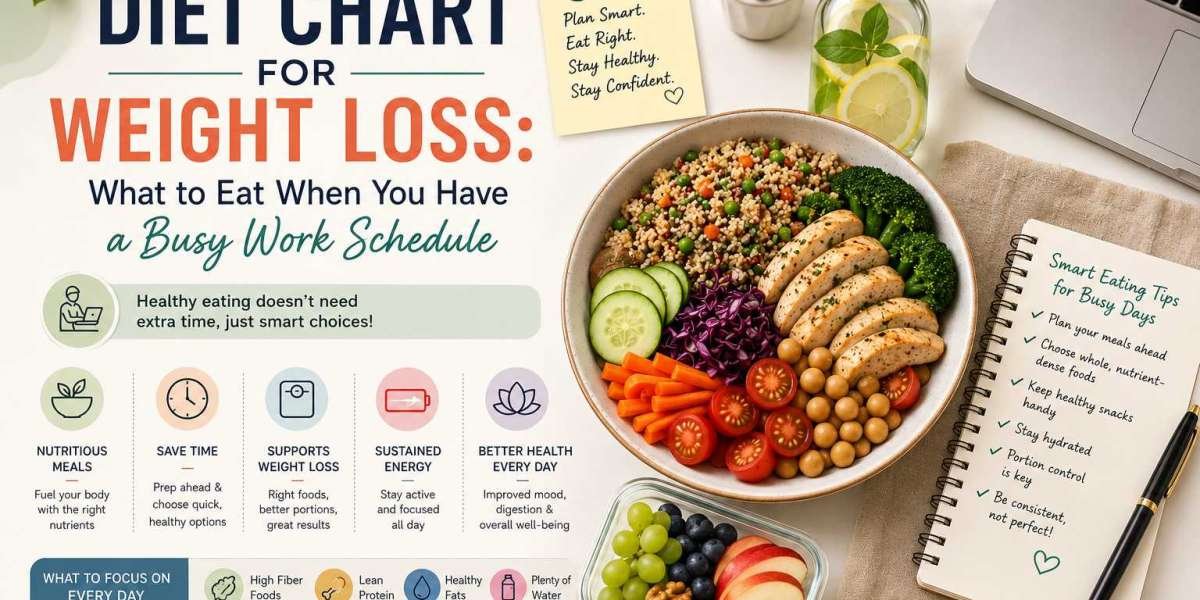

Maintaining healthy eating habits can be challenging when your workday is packed with meetings, deadlines, commuting, and little time to prepare meals. When you're busy, it is easy to skip meals, order fast food, or rely on packaged snacks.
However, following a Diet Chart For Weight Loss does not have to mean spending hours in the kitchen. With some planning and simple food choices, you can create a routine that supports your weight-loss goals while fitting into a busy lifestyle.
Why Busy Schedules Can Affect Eating Habits
A hectic routine often leads to irregular meals and impulsive food choices. You may skip breakfast, eat lunch at your desk, or feel extremely hungry by the evening and overeat.
The solution is not extreme dieting. Instead, having a few convenient and nutritious options available can make healthy eating easier throughout the day.
Start With a Practical Breakfast
Breakfast doesn't need to be complicated. Choose options that provide a combination of protein, fiber, and carbohydrates to keep you satisfied.
Simple choices can include:
- Vegetable oats
- Eggs with whole-grain toast
- Vegetable poha
- Besan chilla
- Unsweetened yogurt with fruit and seeds
Preparing some ingredients the night before can save valuable time in the morning.
Plan a Balanced Work Lunch
Lunch is often where busy professionals struggle the most. Restaurant meals and takeaways can be convenient but may contain more calories, refined carbohydrates, sodium, or oil than expected.
A balanced Diet Chart For Weight Loss can include a simple lunch with vegetables, protein, and a suitable portion of whole grains.
For example, you might choose dal with vegetables and roti, a vegetable and paneer bowl, or a homemade grain bowl with plenty of vegetables.
Keep Healthy Snacks Within Reach
Long gaps between meals can leave you reaching for biscuits, chips, or sweets at work. Keeping convenient snacks nearby can make better choices easier.
Try options such as:
- A handful of nuts
- Roasted chickpeas
- Fresh fruit
- Unsweetened yogurt
- Seeds
- Homemade snacks
The idea is not to snack constantly but to have nutritious options available when you genuinely feel hungry.
Don't Depend on Perfect Meal Timing
A busy schedule may not always allow you to eat at exactly the same time every day. Instead of worrying about perfection, focus on maintaining a reasonably consistent routine and avoiding long periods of intentional food restriction.
Your overall eating pattern matters more than following a rigid timetable.
Make Dinner Simple
After a long workday, complicated cooking can feel overwhelming. Keep dinner simple by combining vegetables with a protein source and an appropriate portion of carbohydrates.
For example, a vegetable-filled dal, paneer with sautéed vegetables, or a simple homemade meal with roti and vegetables can be practical choices.
Preparing extra portions during dinner can also provide an easy lunch for the following day.
Stay Hydrated During Work
Busy professionals often forget to drink enough water. Keeping a reusable water bottle at your desk can serve as a simple reminder.
Water should generally be your primary beverage, while sugary drinks and frequent high-calorie beverages are best limited when working toward weight-loss goals.
Prepare Before the Week Gets Busy
Meal preparation doesn't have to involve cooking every meal in advance. Even small steps can help.
You can:
- Wash and cut vegetables
- Prepare basic ingredients
- Keep healthy snacks ready
- Cook larger portions of staple foods
- Plan a few meals before the workweek begins
These small preparations can reduce the temptation to order unhealthy food when you're short on time.
Focus on Sustainable Choices
The best Diet Chart For Weight Loss is one that you can realistically follow. If your plan requires elaborate recipes, expensive ingredients, or strict meal timings, maintaining it alongside a demanding job can become difficult.
A practical approach should fit your working hours, food preferences, lifestyle, and nutritional needs.
Final Thoughts
A busy work schedule does not mean you have to put your weight-loss goals on hold. Simple meal planning, convenient healthy snacks, balanced meals, and better hydration can help you make healthier choices even on demanding days.
Rather than following a restrictive diet, focus on creating a Diet Chart For Weight Loss that works with your lifestyle. At The EatWell Plate, personalized nutrition guidance can help you build practical eating habits based on your individual routine and goals.