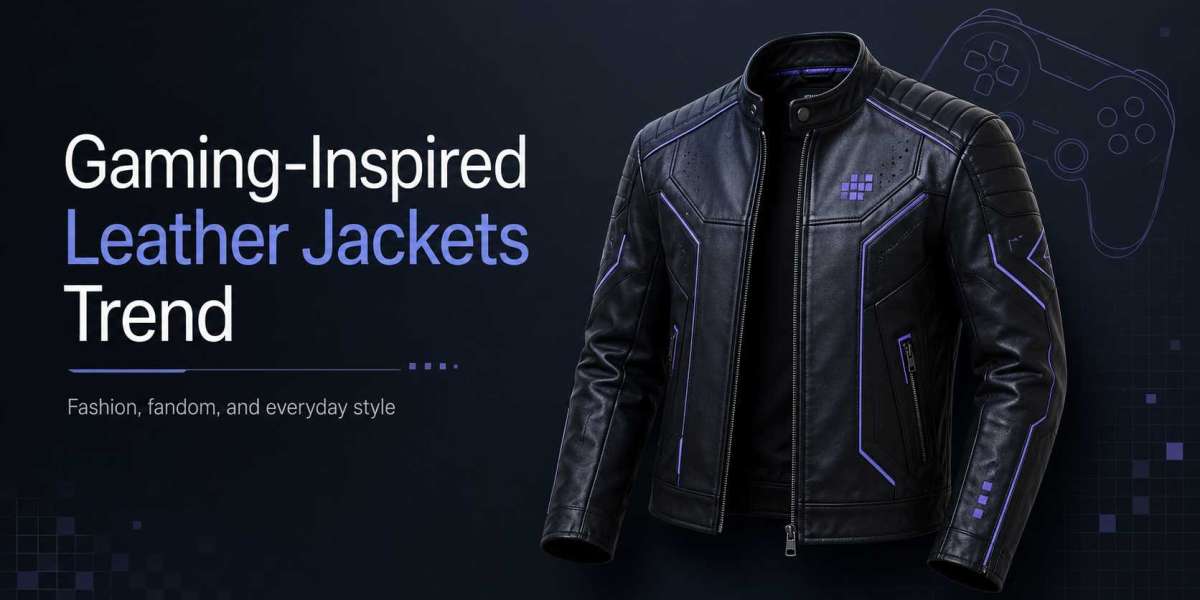

For years, video game clothing was easy to identify. It usually featured oversized logos, character portraits, or bright graphics made for conventions. That approach still exists, but a different trend is reshaping gaming fashion in the United States. Fans are increasingly choosing leather jackets that capture a game’s atmosphere instead of simply printing its title across the back.
This shift reflects the changing American gamer. In 2025, 205.1 million Americans played video games for at least one hour per week, and the average player was 36. Half of U.S. players were 35 or older. That audience wants clothing that can move between fandom, work, nightlife, travel, and everyday streetwear.
From Replica to Wearable World-Building
The most interesting gaming jackets now function like environmental storytelling. A distressed finish can suggest a post-apocalyptic city. Padded shoulders can recall tactical armor. A worn brown surface may evoke an open-world outlaw, while a clean black biker shape can suggest a futuristic protagonist.
A Resident Evil 9 Jacket, for example, can attract attention without depending on a giant game logo. Its appeal comes from survival-horror design language: dark leather, practical pockets, weathered surfaces, protective collars, and a silhouette prepared for danger. Capcom identifies Resident Evil Requiem as the ninth mainline title, showing how long-running game worlds create visual identities beyond the screen.
This is less like wearing merchandise and more like carrying a fragment of a fictional world into daily life.
Why Leather Fits Gaming So Naturally
Leather communicates rebellion, protection, movement, and endurance. Those qualities also define memorable game characters. Pilots, racers, survivors, detectives, and antiheroes often wear leather because it gives them history. Even a new character can appear experienced when a jacket has faded seams, scratched hardware, or repaired panels.
Unlike a printed shirt, a leather jacket changes through use. It softens at the elbows, develops natural folds, and records the wearer’s habits. It behaves almost like an in-game item that gains personality over time.
The Rise of Stealth Fandom
One reason gaming-inspired outerwear is becoming more wearable is stealth fandom: clothing that fellow fans may recognize while everyone else simply sees a strong jacket.
A specific collar, unusual panel arrangement, embroidered symbol, or color combination can act as a private signal. Recognition becomes a social moment between people who share the same game.
This approach suits consumers who grew up with games but do not want to dress in obvious costume. They can pair a character-inspired jacket with denim, boots, sneakers, or a plain hoodie. The result feels familiar enough for daily life but distinctive enough to start a conversation.
Fashion Has Entered the Game
The movement is part of a wider exchange between fashion and interactive entertainment. Fashion labels have launched projects inside platforms such as Roblox, Fortnite, The Sims, and PUBG. Vogue reported that fashion companies treat gaming as a long-term cultural channel, partly because virtual clothing has become a tool for identity and self-expression.
The exchange works both ways. Fashion brands enter games with digital collections, while game aesthetics leave the screen through jackets, sneakers, and streetwear. Players learn to notice materials, silhouettes, customization, and rarity through character wardrobes. Those habits can shape what they value in physical clothing.
Cosplay plays a role, but the boundary between costume and fashion is becoming less rigid. The Her Universe Fashion Show at San Diego Comic-Con highlights designers who combine fandom with leatherwork, sculpting, and wearable technology. Such work shows that fan clothing can involve serious design rather than simple imitation.
Why the Trend Works in America
American style has long made room for functional outerwear: motorcycle jackets, varsity jackets, flight jackets, workwear, and Western leather. Gaming-inspired designs can enter this tradition naturally. A survival-game jacket may resemble rugged workwear. A racing-game design can borrow from motorsport. A science-fiction piece can use a familiar bomber structure.
Climate also affects styling. In colder states, leather jackets become layers over knits and hoodies. In warmer areas, lighter leather, cropped shapes, vests, and minimally insulated jackets offer the same visual connection without excessive weight.
The Future Is Personal, Not Literal
The next stage of gaming-inspired leather fashion will likely focus less on costume accuracy and more on personal interpretation. Fans may choose one character’s color palette, another’s utility details, and a fit suited to their lifestyle.
That evolution makes sense because gaming is interactive. Players do not only watch characters; they control, customize, and identify with them. The strongest gaming-inspired jackets follow that principle. They provide a starting point, but the wearer completes the story.
Gaming fashion is moving beyond novelty merchandise. Its best pieces are becoming everyday objects with emotional meaning—part memory, part design, and part identity. As digital and physical lives overlap, the leather jacket has become a natural bridge between them.