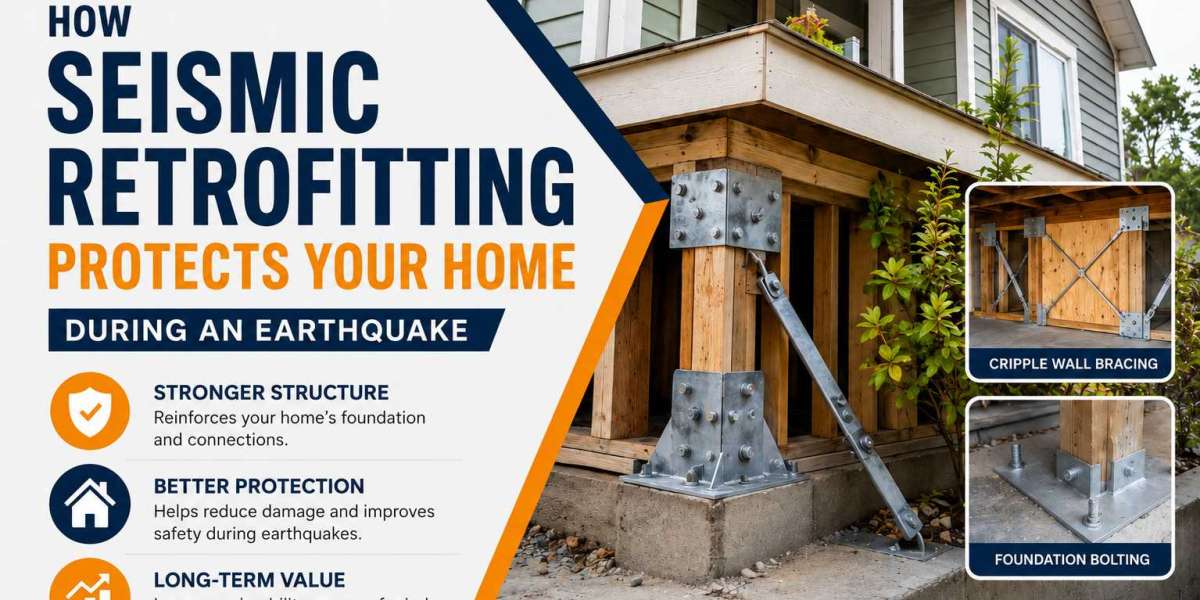

Earthquakes can place intense horizontal and vertical forces on a house within seconds. Homes that were built under older standards may not have the connections needed to resist this movement, increasing the risk of shifting, cracking, or partial structural failure. Hiring a professional Seismic Retrofitting Contractor can help strengthen vulnerable areas, improve the connection between the home and its foundation, and reduce the likelihood of serious damage during seismic activity.
Understanding Seismic Retrofitting
Seismic retrofitting is the process of modifying an existing structure so it can better withstand earthquake movement. The goal is not to make a home completely earthquake-proof, because no building can be guaranteed to remain undamaged during every seismic event.
Instead, retrofitting helps the structure move more safely as the ground shakes. It strengthens weak connections and improves the way earthquake forces travel through the building.
Common retrofit work may include foundation bolting, cripple-wall bracing, reinforcing soft-story areas, strengthening structural connections, and repairing damaged framing.
Keeping the Home Attached to the Foundation
One of the most important parts of seismic retrofitting is securing the home to its foundation. Older houses may rest on a concrete foundation without enough bolts or anchors connecting the wooden framing to the concrete.
During an earthquake, the ground and foundation can move while the house above reacts differently. Without strong connections, the structure may slide or shift away from its foundation.
Foundation bolting uses approved anchors to secure the sill plate and framing to the concrete foundation. This connection helps the house and foundation move together, reducing the risk of major displacement.
Strengthening Cripple Walls
Cripple walls are short framed walls located between the foundation and the first floor of some homes. They may surround a basement or crawl space and support the weight of the building above.
Older cripple walls may not have enough bracing to resist side-to-side earthquake forces. They can bend, collapse, or separate from surrounding structural elements.
Seismic retrofitting often strengthens these walls by installing structural sheathing, blocking, anchors, and other approved hardware. Proper bracing creates a stronger wall system and helps transfer forces safely to the foundation.
Reducing Soft-Story Vulnerability
A soft-story condition occurs when one level of a building has less structural support than the floors above it. This is often found in homes or small residential buildings with large garage openings, wide windows, or open parking areas on the ground floor.
During an earthquake, the weaker level may experience excessive movement because it lacks enough walls or framing to resist lateral forces.
Retrofitting a soft-story structure may involve adding steel frames, reinforced walls, columns, or stronger connections. These improvements help distribute earthquake forces and reduce the risk of the lower level collapsing.
Improving Structural Connections
A home is made up of many connected parts, including the foundation, walls, floors, roof, beams, and framing members. The strength of the building depends on how well these components remain connected.
Earthquake forces can expose weak joints, loose fasteners, damaged framing, and insufficient hardware. If one connection fails, nearby parts of the home may experience additional stress.
Professional retrofitting may include installing brackets, straps, clips, anchors, and hold-down systems. These components help connect structural sections and create a more continuous path for earthquake forces to travel through the building.
Protecting Utility Systems
Earthquakes can also damage gas lines, water pipes, and electrical connections. Broken utility lines may cause leaks, flooding, fires, or service interruptions.
Retrofitting plans may include flexible gas connections, secure water heaters, supported pipes, and improved fastening around utility equipment. Heavy water heaters should be properly strapped so they are less likely to tip or pull away from connected lines.
Although utility improvements do not replace structural retrofitting, they can reduce secondary hazards after an earthquake.
Reducing Repair Costs After an Earthquake
Structural damage caused by foundation movement, wall failure, or framing displacement can be expensive to repair. Damage may also affect flooring, plumbing, wiring, drywall, roofing, doors, and windows.
A properly retrofitted home may still experience cosmetic damage, but stronger connections can reduce the likelihood of severe structural failure. Preventive improvements are often easier to manage than emergency repairs after a major seismic event.
Retrofitting can also help protect personal belongings and reduce the time a home remains unsafe or uninhabitable.
Supporting Long-Term Property Value
Homebuyers often consider structural safety when purchasing property in an earthquake-prone area. A professionally retrofitted home may provide greater confidence because important vulnerabilities have already been addressed.
Permit records, inspection reports, engineering documents, and contractor invoices can help demonstrate that the work was completed responsibly. These records may also be useful during insurance reviews, refinancing, or future property sales.
Why Professional Assessment Matters
Every home is different. Its age, foundation type, framing design, condition, and previous modifications all affect the type of retrofit it may require.
A professional inspection helps identify weak points and determine which improvements are appropriate. Some projects may also require engineering plans, permits, and local inspections.
Working with GM Builders General Contractor Corporation can help homeowners coordinate seismic evaluations, structural upgrades, permits, inspections, and related construction work through one experienced team. Professional seismic retrofitting strengthens critical connections, improves structural stability, and helps create a safer, more resilient home.