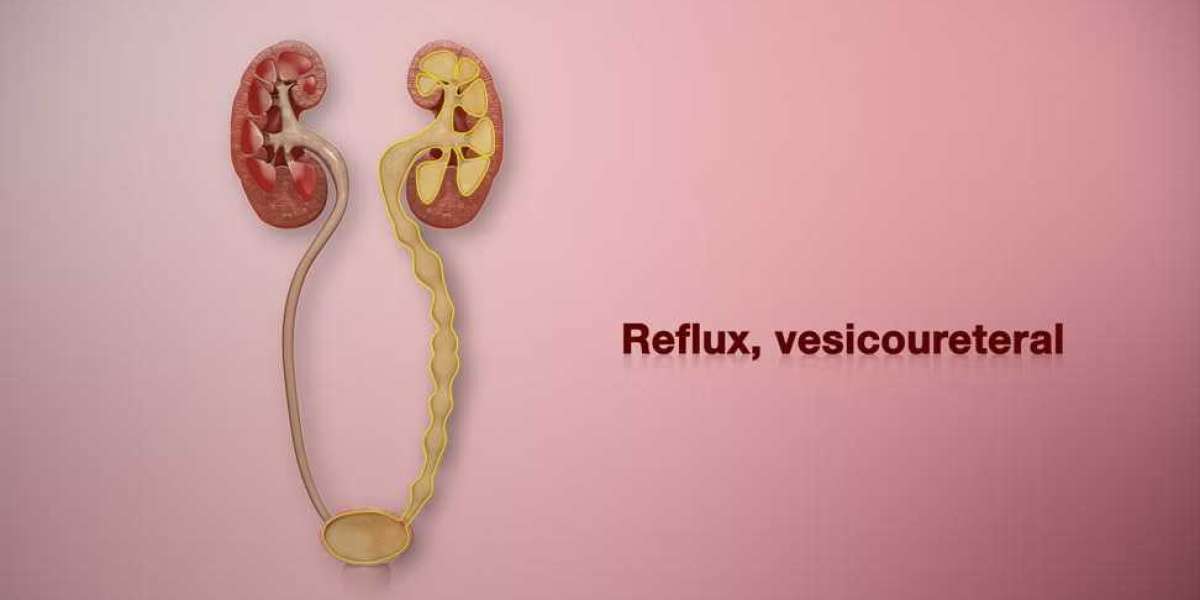

Vesicoureteral reflux (VUR) is a pediatric urological condition in which urine flows backward from the urinary bladder into one or both ureters, and sometimes up to the kidneys. Normally, urine travels in a one-way direction from the kidneys to the bladder through the ureters. This forward flow is maintained by a valve mechanism at the junction of the ureter and bladder. When this valve does not function properly, urine reflux occurs.

VUR is commonly diagnosed in infants and young children and may affect one ureter (unilateral) or both ureters (bilateral). The severity is graded from Grade I (mild) to Grade V (severe), depending on the extent of backflow and kidney involvement.
Causes of Vesicoureteral Reflux:
VUR is classified into two main types:
Primary Vesicoureteral Reflux:
This is the most common form in children. It occurs due to a congenital weakness or immaturity of the valve between the ureter and bladder. As the child grows, the ureter lengthens and the valve mechanism often matures, allowing many mild cases to resolve spontaneously.
Secondary Vesicoureteral Reflux:
This type develops due to obstruction or dysfunction in the bladder outlet. Conditions such as posterior urethral valves or neurogenic bladder (nerve-related bladder dysfunction) may prevent complete emptying of the bladder, increasing pressure and forcing urine backward into the ureters.
Symptoms of VUR:
The clinical presentation depends on severity and complications. Common symptoms include:
- Recurrent urinary tract infections (UTIs)
- Fever without obvious source
- Pain or burning during urination
- Increased urinary frequency or urgency
- Bedwetting
- Abdominal or flank discomfort
- Poor appetite or irritability in infants
- High blood pressure in advanced cases
In some cases, VUR is detected incidentally during evaluation for antenatal hydronephrosis.
Diagnostic Evaluation:
Early diagnosis is crucial to prevent kidney damage. Investigations may include:
- Urinalysis and urine culture to detect infection.
- Ultrasound of kidney, ureter, and bladder (KUB) to assess structural abnormalities and hydronephrosis.
- Micturating cystourethrogram (MCUG): A specialized X-ray study where contrast dye is introduced into the bladder to evaluate backward urine flow.
- Nuclear renal scan (DMSA or other isotopic study): To assess kidney function and detect scarring.
These tests help determine the grade of reflux and guide treatment planning.
Treatment Options:
Management depends on the grade of reflux, frequency of infections, and kidney function.
Medical Management:
Mild cases may be managed conservatively with low-dose prophylactic antibiotics to prevent recurrent UTIs. Regular follow-up with imaging studies is essential. Preventive measures such as maintaining hydration, managing constipation, ensuring proper perineal hygiene, and encouraging regular voiding are important supportive strategies.
Surgical Management:
When reflux is severe, persistent, or associated with recurrent infections and kidney damage, surgical correction is recommended. Options include:
- Endoscopic injection of a bulking agent to strengthen the valve.
- Laparoscopic or robotic-assisted valve reconstruction.
- Ureteric reimplantation, where the ureter is repositioned to create an effective anti-reflux mechanism.
For families seeking Vesicoureteral Reflux Surgery Child in Delhi, advanced minimally invasive techniques offer excellent success rates and faster recovery.
Prognosis:
The outlook for children with VUR is generally favorable. Many mild cases resolve with growth. Surgical intervention, when required, has a high success rate — often exceeding 95%. Early diagnosis and consistent follow-up significantly reduce the risk of permanent kidney damage.
Parents looking for specialized pediatric urology care can consult Dr. Prashant Jain, widely regarded as the Best Pediatric Surgeon in Delhi. With extensive experience in managing complex pediatric urological conditions, he provides individualized treatment plans focused on preserving kidney health and ensuring long-term well-being.
#Vesicoureteral Reflux Surgery Child In Delhi #Posterior Urethral Valve Treatment In Delhi